Calculation and drawings before cut
Duty, steel, electrics and the spare list are frozen on paper before the shop lights a torch. The customer sees reactions, speeds and the hook path while the plate is still uncut.
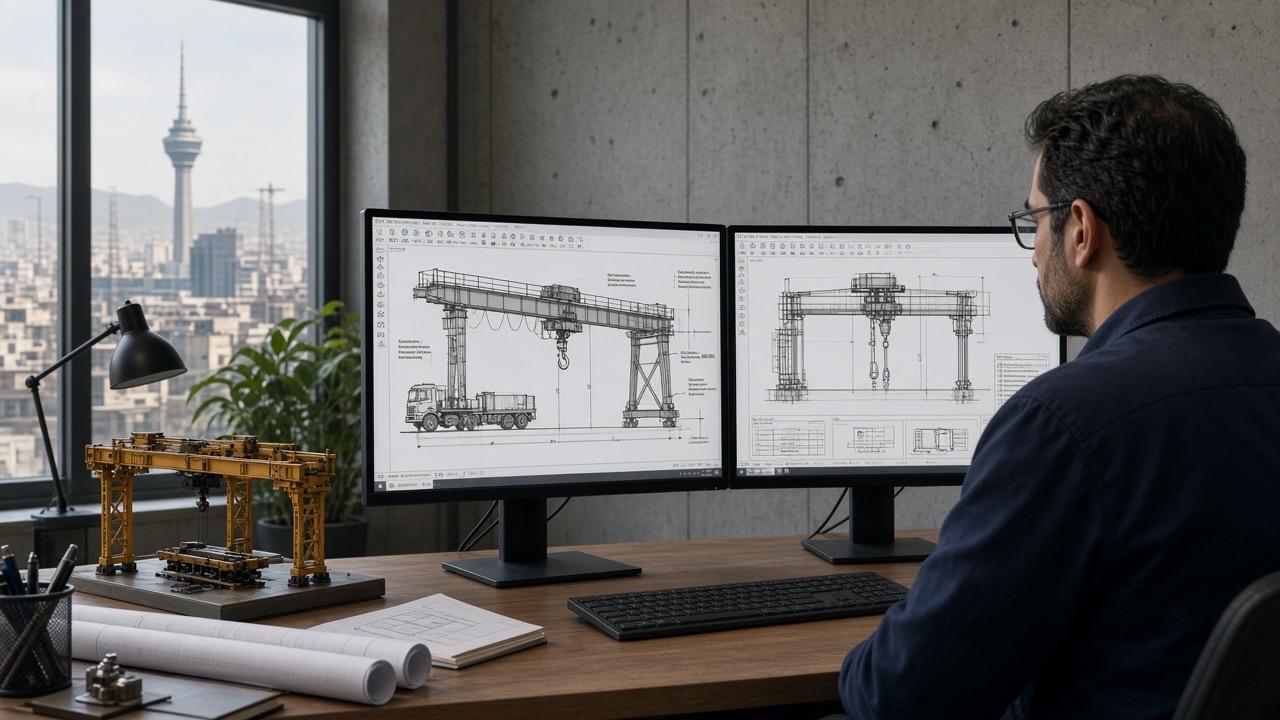
This is the journey gate between survey and shop, not the sold engineering-service page. We take the brief and turn it into a drawing set: girder, end carriages, hoist class, long-travel and cross-travel, pendant or radio, festoon or conductor bar. Runway reactions leave with the pack so the civil engineer can sign the building, not discover it on install day.
When it fits
You are here after the site facts exist and before fabrication. Changing span or SWL after camber is expensive. Changing them on a drawing is ordinary.
Duty and steel
FEM/DIN practice sizes the girder and the wheels from the recorded cycle, not from a neighbour’s crane. A store that lifts twice a day is not the same steel as a cell that cycles every few minutes. The hoist class follows that sheet.
Interface
Rail centres, end-carriage wheelbase and the building grid have to agree on the drawing. Electrics are IEC practice from the Tehran desk: isolator, earth, limit switches, and the choice between festoon and conductor bar. The spare list is part of the same issue, not a later email.
Related service
Shop build and test is the next journey page. The design-to-standard service page is for plants that buy engineering as a scope of work, including FEM/DIN/ISO/IEC packages without this build sequence.
- Reactions before plate cut
- Hook path on the drawing