Site survey and crane brief
The job starts with the load, the span, the building, and the process the hook must serve. A nameplate or a sketch is the input; a site visit is how we trust it.
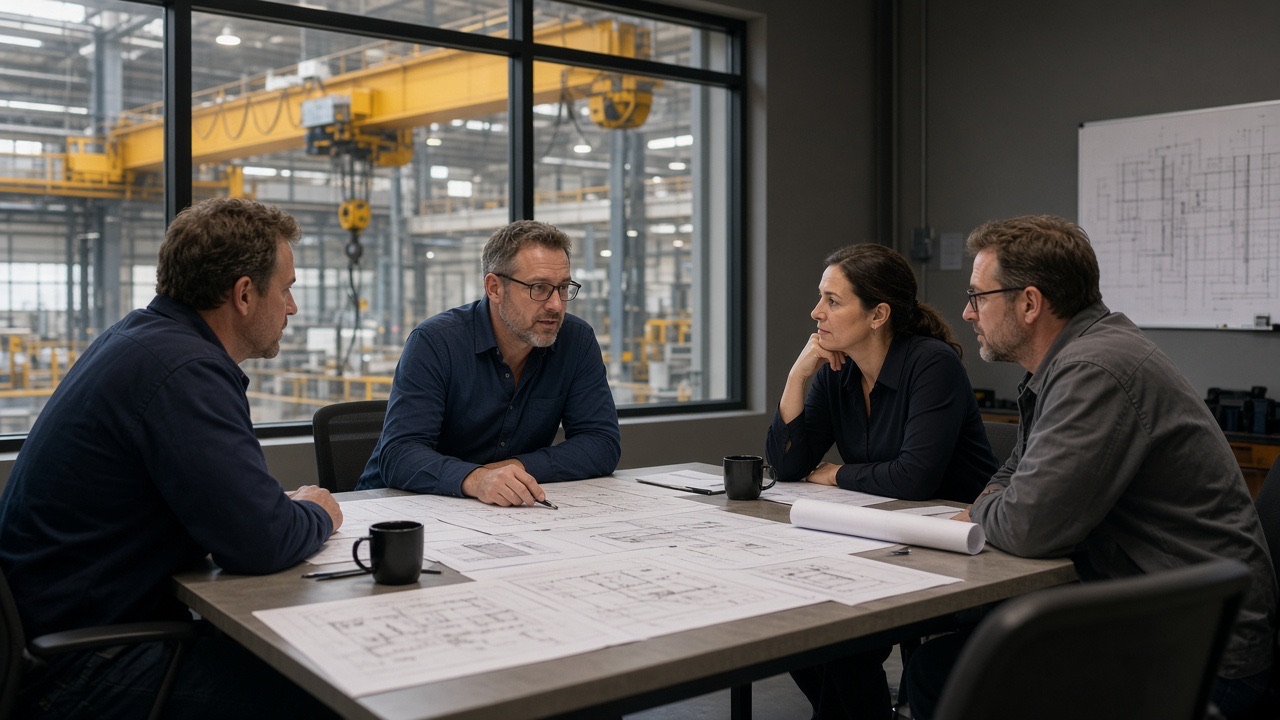
This page is the first move in the build journey, not a product catalogue and not the rail-and-lift installation service. We collect what the hook will actually do: piece weight, how often it cycles, where people stand, and whether the hall is still a drawing. If a crane already hangs there, we read the plate before we talk about a new one. A WhatsApp photo is a start. It is not a survey.
When it fits
Use this step when the plant knows it needs handling but the numbers are still loose: a new hall, a line that outgrew a chain hoist, or an old machine whose plate is the only honest document. Skip it and the later calculation inherits a guess.
Duty and steel
Duty is not chosen on this visit. We record the facts that will set it: lifts per hour, load spectrum, heat, dust, and whether the hook waits or works. FEM class comes after this sheet, not instead of it.
Interface
We look at columns, runway steel if it exists, truck access, and where a festoon or conductor bar could run. Power and earthing points go on the same sketch as the hook path. The civil engineer later receives reactions; they do not receive a blank hall.
Related service
The next journey page is calculation and drawings, before anyone cuts plate. Installation with a lift plan is a later service. Commissioning and the signed sheet come after the machine is in the air.
- Nameplate or sketch first
- Site visit before freeze